
Manual cleaning has long been the standard approach to ice machine sanitation. However, in modern foodservice environments, it’s no longer enough on its own. Ice machines operate continuously, often in warm and humid conditions, making them a persistent hygiene risk between scheduled cleans.
For a leading U.S. coffee chain with hundreds of locations, maintaining consistent ice machine sanitation across sites became increasingly challenging. This case study shows how the brand transitioned from labour-heavy cleaning routines to automated, continuous foodservice sanitation using Icezone™.
Despite regular cleaning schedules, the coffee chain faced recurring issues across its estate:
The key issue wasn’t commitment, was limitation. Manual cleaning could only address contamination after it appeared, leaving gaps in hygiene control.
This raised an important question for the brand:
How often should ice machines be cleaned if contamination starts again immediately?
Ice machines represent one of the most overlooked foodservice hygiene risks. Continuous moisture, low temperatures, and enclosed spaces create ideal conditions for biofilm formation and microbial growth.
Without continuous foodservice sanitation, even the best foodservice equipment cleaning procedures struggle to maintain consistent hygiene — especially across multiple locations with varying staff practices.
To close the hygiene gap between cleans, Biozone Scientific introduced Icezone™, a chemical-free solution designed specifically for ice machine sanitation.
Icezone™ uses UVGI foodservice sanitation technology to continuously inhibit microbial growth and biofilm formation inside:
Rather than replacing manual cleaning, Icezone™ strengthens it. The system works in the background as a preventative maintenance foodservice solution, helping maintain cleaner conditions day and night.
Two locations were selected for a three-month evaluation.
The trial included:
Testing focused on Aerobic Plate Count (APC), a standard metric for microbial contamination in foodservice environments.
Within weeks, technicians observed visible improvements. Ice machines stayed cleaner for longer, and scheduled maintenance required significantly less effort.
After three months:
As one technician explained:
“The cleaning process was noticeably easier — I didn’t have to scrub as hard, and the buildup was minimal.”
Only one site required an additional unit for full bin coverage, helping refine future installations.
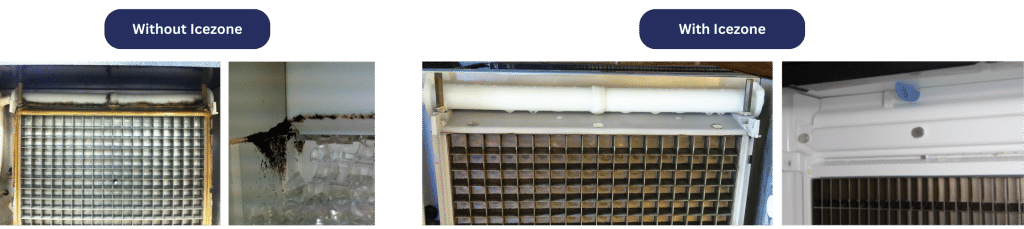
This case study highlights the value of automated hygiene systems in modern foodservice operations.
By introducing Icezone™, the coffee chain achieved:
Most importantly, hygiene became consistent, not dependent on staff availability or cleaning schedules.
Manual cleaning remains essential — but it can’t work alone. This coffee chain’s journey shows how automated foodservice sanitation fills the gap, maintaining hygiene between cleans and reducing operational strain.
For operators asking how often to clean ice machines, the answer is changing. Continuous sanitation now plays a key role in protecting equipment, people, and product quality.
Make Icezone™ Your New Hygiene Standard. Join Our Trial Program Today! ⬇️